Jordan announces three arrests in Karak church-attack investigation
Jordanian officials announce arrests while stressing that evidence gathering and the investigation continue.
Context • Public sources • Clear explanations
Counterterrorism is a complex subject. This guide brings its core ideas, research sources and reporting questions into one accessible place.
Explore the essentialsFind original sources →Jordanian officials announce arrests while stressing that evidence gathering and the investigation continue.
The Home Office explains decision-making, parliamentary approval and appeal routes, rather than announcing a new ban.
The October 23 advisory confirms an ordered departure for specified government personnel and broader airport restrictions.
A suspect is in custody following fatal shootings; the reported motive and terrorism connection remain under investigation.
Federal charges concern alleged threats from December 2025; the indictment does not establish guilt.
A new Treasury action reaches professional intermediaries and maritime businesses, with clear limits on what sanctions establish.
A federal sentencing follows guilty pleas to arson and attempted material support, with the limits of the admitted conduct explained.
A new police update distinguishes state-threat suspicions from earlier terrorism arrests and unresolved questions.
A new sentencing outcome following a terrorism conviction, distinguishing 12 years in custody from four subsequent years on licence.
The fund confirms its seventh-round total and explains upcoming notifications, authorization and the separate start of rolling payments.
A UK sentencing outcome, with the limits of police findings about wider network links explained.
A new FinCEN alert addresses potential misuse while affirming legitimate charities should retain access to financial services.
A new EU information-sharing capability, with the distinction between information alerts and arrest-warrant alerts explained.
New OFAC sanctions target a commercial network Treasury links to Cartel del Noreste, with the legal authorities and limits explained.
MI5 describes a third core mission focused on resilience, with its relationship to the separate Home Office review explained.
A new UK review and expanded police support, distinguishing announced measures from recommendations still to come.
Official travel guidance on Saudi Arabia aviation risks, with distinctions between government employee restrictions and advice for other travelers.
An attributed account of a UAE investigation, separating allegations from court findings and noting unresolved questions.
A new guilty plea involving the 764 extremist network, with the pending sentencing and FBI resources for caregivers.
A new Treasury action targets Iranian petroleum shipping. Read the stated financing context and the distinction between sanctions and criminal findings.
DOJ announces charges in an alleged attack plot. Read what was announced and why a complaint is not a conviction.
01 / Definitions
The FBI distinguishes domestic and international terrorism by the origins and connections of the violent activity. A headline’s label is a starting point; read the relevant definition and the evidence behind it.
02 / Response
The FBI describes a role that includes preventing attacks, investigating unlawful activity and working with partner agencies. Its overview helps explain the relationship between an investigation, disruption and prosecution.
03 / Evidence
Ask what a document actually establishes. An allegation, an arrest and a court outcome describe different stages. Keep those distinctions visible when reading or sharing a story.
Cooperation in context
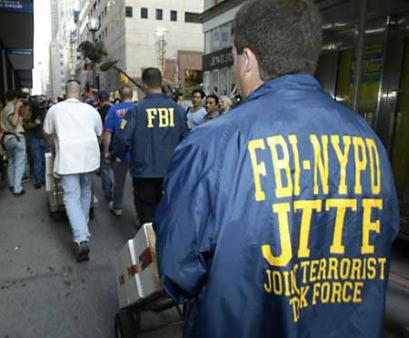
Counterterrorism work brings together people from different agencies and disciplines. The FBI describes its Joint Terrorism Task Forces as partnerships that connect federal, state and local expertise.
Understanding those partnerships helps readers identify who is involved in an investigation and where to look for original information.
Learn about Joint Terrorism Task Forces →This archival image illustrates agency cooperation; it does not depict a current event. Government imagery does not imply affiliation or endorsement.
Start with the FBI’s counterterrorism overview, then follow its links to reporting and reference material.
Visit the FBI →Consult the Department of Homeland Security’s National Terrorism Advisory System. Check the dates and scope of any notice.
Visit DHS →Use the State Department’s Country Reports on Terrorism as a starting point for international background. Note the reporting year.
Visit the State Department →Use official reporting channels. The FBI’s online tip portal is linked below; this website does not collect reports.
Go to the FBI tip portal →External resources are maintained by their respective agencies. A link does not imply affiliation or endorsement.
Read carefully. Share responsibly.
Fast-moving stories can mix established facts with speculation. A few simple checks make the difference between being informed and repeating an uncertain claim.
No. USA Counterterrorism is an informational website. Official government resources are clearly linked to their own domains.
No. This homepage is a reference guide. For current advisories and incident information, visit the relevant official agency and check the publication date.
This site does not accept tips. Use the FBI’s official tip portal for information intended for the FBI.
Start with the original document, identify the author and date, and distinguish confirmed facts from claims. Then compare reporting that adds independently sourced detail.
About this resource
USA Counterterrorism offers an accessible entry point to a difficult subject. This page focuses on foundational explanations, direct source links and practical habits for reading security reporting.
It does not provide operational guidance, publish a live threat assessment or speak for any government agency. Historical material elsewhere on this domain may reflect an earlier version of the website.
